

TL;DR: This comprehensive guide covers the essential path to becoming a web and API security expert. Start with programming basics (JavaScript, Python, SQL, Bash), master web fundamentals (HTTP, requests/responses, headers, CORS), learn essential tools (Burp Suite, Postman, browser devtools), understand web architecture and authentication systems, practice in labs (PortSwigger, OWASP Juice Shop, crAPI), develop a bug bounty mindset through reading reports and hands-on hunting, and consider certifications (BSCP, APISec, eWPTX, OSWE) to validate your skills and land a job in cybersecurity.
🚀 Introduction: Your Journey into Web & API Security
So you want to learn bug bounty hunting, penetration testing, or web and API security in general? You're in the right place. Whether you're a complete beginner or someone who knows the basics but wants to level up, this roadmap will give you a clear, structured path forward.
The cybersecurity field is constantly evolving, and web applications remain one of the most targeted attack surfaces. Every day, hackers find new vulnerabilities in websites and APIs, making this an exciting and rewarding career path.
But where do you start? That's exactly what we'll cover in this guide.
- Hacking APIs Book by Corey J. Ball (Must Read)
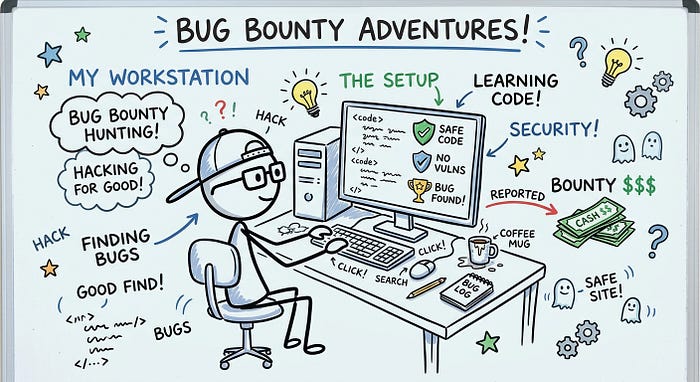
💻 Programming Basics: Your Foundation
Before you can hack anything, you need to understand how applications are built. Think of it like learning the layout of a house before you can find ways to secure it or test its locks.
The good news? You don't need to become a master programmer — you just need to understand the essentials.
The Big Four Programming Languages
JavaScript is at the heart of every web application. When you view a website's source code, you'll always find JavaScript files running behind the scenes.
Understanding JavaScript helps you grasp how websites function and is crucial for finding vulnerabilities like Cross-Site Scripting (XSS). If you don't know HTML yet, add that to your learning list — it pairs perfectly with JavaScript.
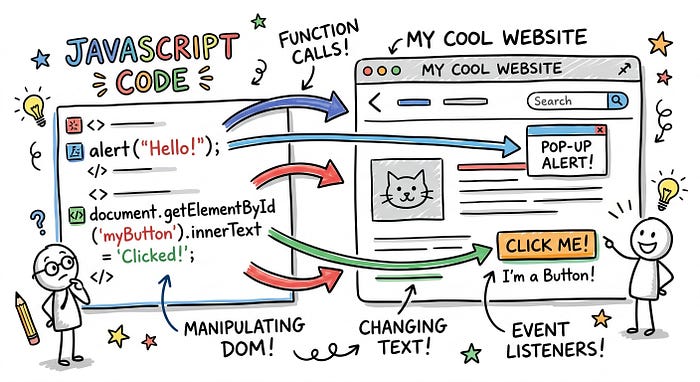
Python is the language of automation and tool-building in cybersecurity. Most security tools you'll use are written in Python or Go, so learning Python makes you versatile.
But don't just memorize syntax — understand how loops, functions, and conditions work. Once you grasp these concepts, learning any programming language becomes much easier.
SQL (Structured Query Language) helps you understand databases — the backbone of most web applications. You'll learn how data is stored, retrieved, and manipulated. This knowledge directly translates to understanding and exploiting SQL injection vulnerabilities, one of the most critical web security issues.
Bash scripting is essential for Linux environments where most security work happens. While you might be tempted to copy-paste one-liner commands you see online, understanding Bash means you'll actually comprehend how those commands work. This deeper understanding makes you a much more effective hacker.
Additionally, familiarize yourself with JSON and XML syntax — they're commonly used in API communication and understanding them helps with exploitation techniques like XML External Entity (XXE) injection.
🌐 Web Fundamentals: Understanding How the Web Works
Here's where many beginners go wrong — they skip straight to learning about vulnerabilities without understanding web fundamentals first. This is like trying to fix a car engine without knowing what an engine does. Trust me, everything becomes clearer when you build this solid foundation.
HTTP and HTTPS: The Web's Communication Protocol
HTTP (HyperText Transfer Protocol) is how web browsers and servers communicate. HTTPS is the secure version with encryption.
You see these prefixes every day when browsing, but can you explain exactly what HTTP does? If not, spend time understanding the full request-response cycle.
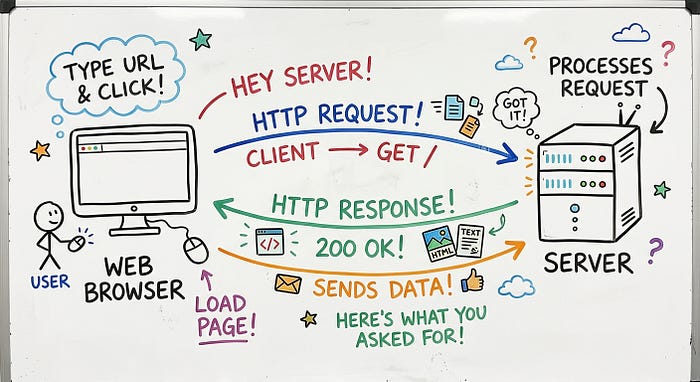
When we say "understand requests," we mean more than just sending a GET request and getting a 200 OK response. You need to understand the request body, parameters, headers, and how data flows between client and server. This knowledge is crucial because most vulnerabilities exist in how data is sent and processed.
HTTP Methods: Your Communication Toolbox
HTTP methods are verbs that tell servers what action to perform. The main ones you'll encounter are:
- GET — Retrieves data (like loading a webpage)
- POST — Submits data (like filling out a form)
- PUT — Updates existing data completely
- PATCH — Partially updates data
- DELETE — Removes data
Understanding each method's purpose and behavior is critical because vulnerabilities often appear in specific methods. A vulnerability might not exist in a GET request but could be exploitable in a POST request. This distinction separates beginners from those who actually find bugs.
Status Codes and Headers: Server Messages
HTTP status codes tell you the result of your request. You probably know 200 means success and 404 means "not found," but there are many more codes (301, 403, 500, etc.) that provide important information about what's happening server-side.
Headers are metadata sent with requests and responses. Understanding headers is crucial because many security mechanisms rely on them.
Cookies, authentication tokens, content types, and CORS (Cross-Origin Resource Sharing) policies all depend on specific header configurations. You simply cannot exploit CORS vulnerabilities without understanding how CORS works first.
🛠️ Tools to Start With: Your Security Toolkit
Now that you understand the theory, let's look at the tools you'll use daily. Think of these as your digital Swiss Army knife for security testing.
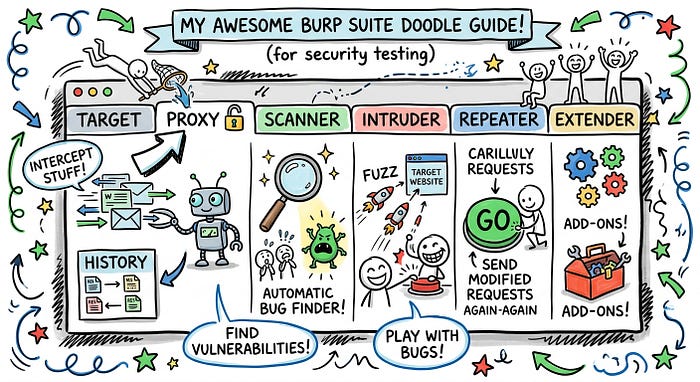
Burp Suite is the industry-standard web vulnerability scanner and proxy tool. It intercepts traffic between your browser and web applications, allowing you to inspect, modify, and replay requests.
Spend time exploring all features: HTTP History, Repeater, Intruder, and more. The better you know Burp Suite, the more effective you'll be.
Postman is your go-to tool for API testing. Whether you're working with REST APIs or GraphQL, Postman lets you craft custom requests, organize collections, and test endpoints systematically. It's especially useful for API-specific vulnerabilities.
Browser DevTools deserve more attention than they typically receive. You can identify vulnerabilities like excessive data exposure without any special tools — just by inspecting responses in DevTools. Open it, browse the application, and examine every response.
Sensitive data leaking in API responses? That's a vulnerability you found with built-in browser features.
Curl allows you to test vulnerabilities directly from the command line. It's lightweight and perfect for quick tests or automating certain checks. Once you're comfortable with Curl, you'll find it faster than opening Burp Suite for simple requests.
Nuclei is a powerful vulnerability scanner that uses templates for different checks. However, a word of caution: don't rely heavily on automation when starting out. Understand vulnerabilities manually first, then use Nuclei to scale your testing once you comprehend what it's actually checking for.
SQLMap automates SQL injection detection and exploitation. It's excellent for database-related vulnerabilities but should supplement, not replace, your manual testing skills.
🏗️ Web Application Architecture: How Everything Connects
This section is absolutely critical, yet many learners skip it entirely. Understanding architecture reveals where vulnerabilities originate and how to think like both a developer and an attacker.
Frontend vs. Backend: Client-Side and Server-Side Logic
Every web application has two sides: the frontend (what users see and interact with in their browsers) and the backend (servers, databases, and business logic running elsewhere). Client-side code can always be modified by attackers using tools like Burp Suite. This is why you can never trust data coming from the frontend — it must always be validated on the backend.
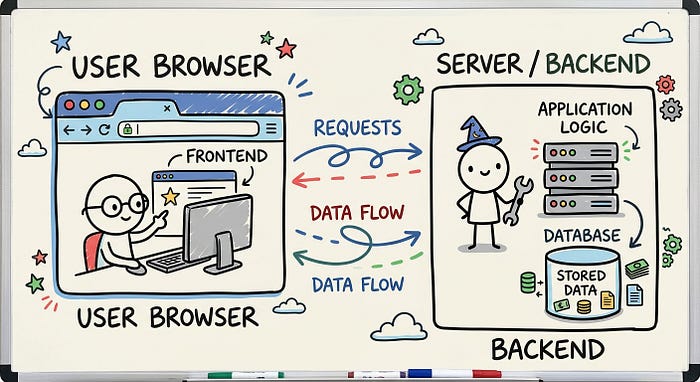
Ask yourself this question: "What should never be trusted from the frontend?" The answer is everything involving user input — search queries, comment sections, user IDs, product filters, anything that appears in requests. This thinking pattern reveals vulnerability patterns, including IDOR (Insecure Direct Object Reference), where changing a parameter value (like a user ID) grants unauthorized access.
Databases: SQL vs. NoSQL
Most applications store data in databases. Traditional SQL databases (like MySQL, PostgreSQL) use structured queries, while NoSQL databases (like MongoDB) use flexible document structures.
Understanding how data is stored and queried helps you identify injection vulnerabilities in both database types. Study database queries and how they're constructed in applications.
APIs: REST and GraphQL
Modern applications heavily rely on APIs for communication. REST APIs use standard HTTP methods and return data in formats like JSON. GraphQL allows clients to request exactly the data they need.
Each has unique vulnerabilities, so understanding both architectures is essential for comprehensive testing. The book "Hacking APIs" by Corey J.
Ball provides excellent coverage of API security from fundamentals to advanced exploitation.
Authentication vs. Authorization: Core Security Concepts
These two concepts are frequently confused but represent distinct security mechanisms. Authentication verifies who you are (login process, passwords, 2FA). Authorization determines what you can access (permissions, role-based access control).
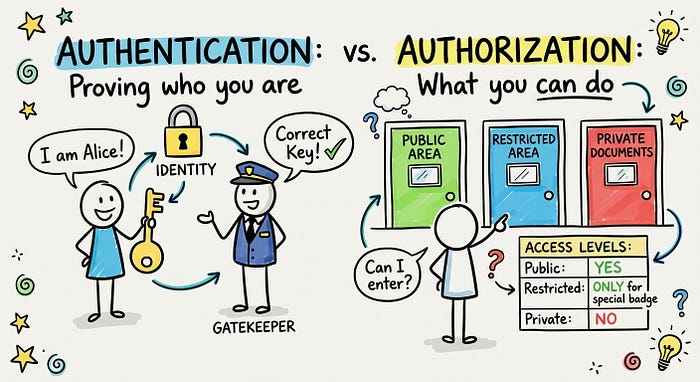
Common authentication vulnerabilities include 2FA bypasses, weak session handling, and token leakage. Authorization vulnerabilities include IDOR (accessing other users' data by changing IDs), broken access control (escalating privileges), and horizontal/vertical privilege escalation. These vulnerabilities consistently rank among the most critical web and API security issues.
Understand session-based authentication versus token-based authentication (like JWT), OAuth flows, access tokens versus refresh tokens, and common mistakes like long-lived tokens or weak session management. These concepts appear constantly in real-world bug hunting.
🧪 Practice Labs: Where Theory Meets Hands-On Experience
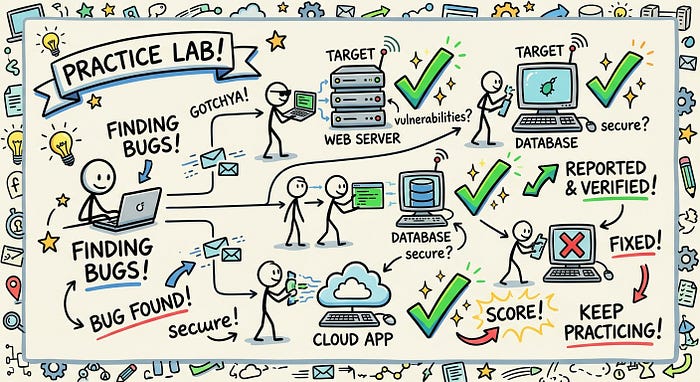
Reading about vulnerabilities isn't enough — you need to practice exploiting them in controlled environments. Labs provide safe spaces to learn without breaking anything (or anyone).
PortSwigger Web Security Academy offers comprehensive labs covering virtually every web vulnerability. Each concept includes multiple difficulty levels and realistic scenarios. This is arguably the best free resource for learning web security hands-on.
OWASP Juice Shop is a deliberately vulnerable web application with gamified challenges. It's perfect for beginners and offers challenges across various difficulty levels and vulnerability categories.
BwAPP and DVWA (Damn Vulnerable Web Application) are older but still valuable practice environments. They provide straightforward vulnerable applications where you can practice common vulnerabilities.
TryHackMe (THM) and HackTheBox (HTB) offer structured learning paths and challenges. THM provides guided learning environments, while HTB focuses more on independent problem-solving.
For API-specific practice, PortSwigger API Labs and crAPI (completely ridiculous API) provide excellent environments. You can set these up locally and test APIs using Postman to combine multiple skills simultaneously.
APIsec University offers free API security training with hands-on labs covering OWASP API Top 10 vulnerabilities.
🧠 Bug Bounty Mindset: Thinking Like a Security Researcher
Technical skills alone won't make you successful — you need the right mindset and approach. Here's how experienced researchers think and work.
Read Writeups and Reports
Studying other researchers' discoveries teaches you methodology, creative thinking, and real-world vulnerability patterns. Many researchers share detailed writeups on their blogs or platforms like Medium. Even when a writeup lacks detail, use tools like ChatGPT to help explain technical concepts you're struggling to understand.
Understand Logic Flaws
Not all vulnerabilities are technical exploits. Logic flaws exploit business logic flaws in applications — like manipulating prices in shopping carts or bypassing workflow restrictions. These often require creative thinking rather than tool-based scanning.
Don't Over-Rely on Scanners
Automated tools find common vulnerabilities, but the best bugs require manual testing and thinking. Use scanners as supplements, not replacements, for your skills. Understanding a vulnerability deeply before using a scanner makes you far more effective.
Start Hunting Earlier Than You Think
You don't need to master every vulnerability before starting bug bounty hunting. After understanding just 3–5 core vulnerabilities (like XSS, SQL injection, and IDOR) and completing related labs, begin hunting.
While testing, continue learning other vulnerability types. Combining hunting with learning is more efficient than learning everything first.
Build Your Professional Presence
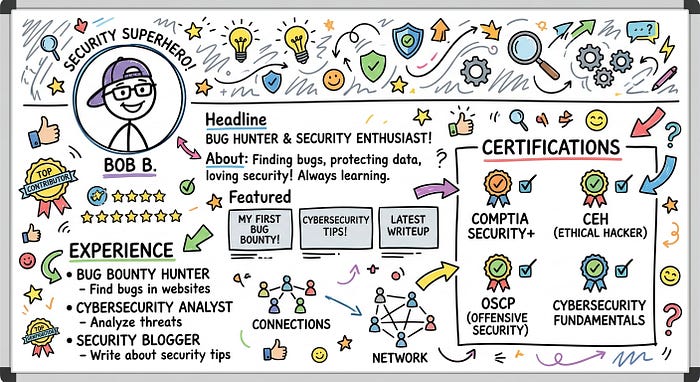
Update your LinkedIn profile regularly. Share what you're learning, challenges you solve, and bugs you find.
This visibility helps land cybersecurity jobs — many hiring managers actively recruit through LinkedIn. Document your journey; it becomes your portfolio over time.
📜 Certifications: Validating Your Skills
Certifications provide structured learning paths and industry-recognized credentials. They particularly help when transitioning into cybersecurity roles.
BSCP (Burp Suite Certified Practitioner) focuses on manual web vulnerability discovery with realistic labs covering access control and complex vulnerabilities. It's highly respected in the industry and demonstrates practical skills.
APIsec Certified Expert specializes entirely in API security. If you've mastered OWASP API Top 10 and practiced with API labs, this certification validates your specialized knowledge.
eWPTX (eLearnSecurity Web Application Penetration Tester eXtreme) represents advanced penetration testing skills. After completing BSCP, eWPTX teaches you about chaining vulnerabilities and advanced exploitation techniques.
OSWE (Offensive Security Web Expert) represents expert-level certification. It focuses on source code review and white-box exploitation — finding vulnerabilities by reading and analyzing application code.
This is why programming skills are essential at advanced levels. The OSWE demonstrates you can find vulnerabilities that automated tools miss.
📚 Key Takeaways
- Build a solid programming foundation with JavaScript, Python, SQL, and Bash before diving into vulnerabilities
- Master web fundamentals including HTTP, requests/responses, headers, and CORS — these form the backbone of all security testing
- Learn essential tools thoroughly: Burp Suite, Postman, browser DevTools, Curl, Nuclei, and SQLMap
- Understand web architecture — frontend/backend separation, databases, APIs, authentication, and authorization
- Practice extensively in labs before attempting real-world targets
- Develop a bug bounty mindset through reading reports, understanding logic flaws, and starting to hunt early
- Consider certifications to structure your learning and validate skills for employers
- Build your professional presence through LinkedIn and share your learning journey
🔗 References
- PortSwigger Web Security Academy
- OWASP Juice Shop
- crAPI
- OWASP API Security Top 10
- OWASP Top 10
- Hacking APIs Book by Corey J. Ball
Whether your goal is becoming a bug bounty hunter, penetration tester, security researcher, or security engineer, this roadmap provides a clear path forward. Remember: cybersecurity is a journey, not a destination.
Start today, stay consistent, and never stop learning. Good luck on your path into web and API security!