
Yes — your first real bug is closer than you think. Not some textbook nonsense, not a contrived lab — a bug on a live program that was in-scope, legal to test, and acknowledged by the team. I'm gonna show you exactly how I found it, what I reported, and why this method works for beginners. And the best part? I didn't do anything crazy. No hacking into NASA, no 1000-line scripts. Just a browser, curiosity, and common sense.
So if you're new and keep asking, "Bro, how do I find my first bug?" — this is exactly for you. Grab a coffee, close those YouTube tabs, and read this properly. You'll thank me later.
Join Discord if u cant read this:https://discord.gg/rJexj8W7yd

The Beginning — Curiosity Wins
I wasn't even hunting seriously that day. I was just checking out some websites that looked interesting — React-based, modern UI, login/register stuff. Basically, sites where users actually do things.
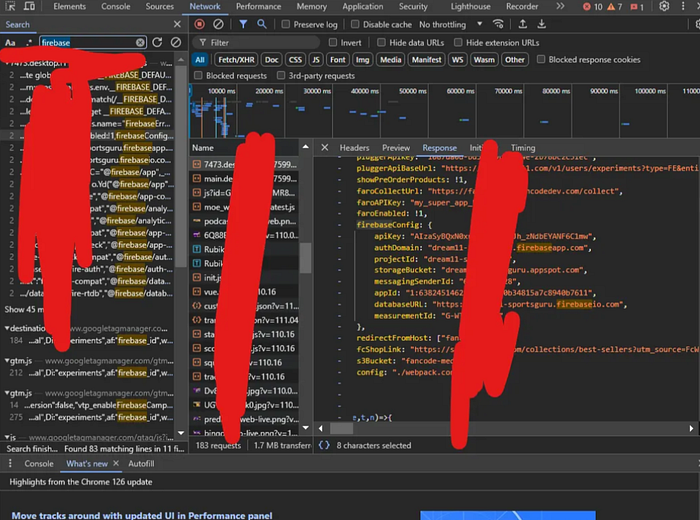
When I opened one, I randomly checked the Developer Tools (F12) — not for any reason, just habit. And boom, in one of the JS files, I noticed something weird — a long key-like strings sitting openly in the code. At first, I ignored it. Then I was like, "Wait… why is this even here?"
thats an config file!!
Step 1 — Picking the Target
Don't overthink it. You don't need a massive company or secret program. Pick a site that's active, modern, and interactive — something with login, OTP, or user actions. E-commerce, SaaS dashboards, or even small startups work great.
I usually prefer React-based apps — they ship tons of code to your browser, and sometimes developers hide "temporary" keys or tokens in there.
If the site looks well-built, perfect. If it looks slightly broken, even better 😏.
Step 2 — Look, Don't Force
Open the site → Press F12 → Go to Sources tab.
Now just look around like a detective — you're not hacking, you're observing.
Search for files named something like:
config.jsmain.*.jsenvbundle
Then hit Ctrl + F and search keywords like:
key
token
auth
api
aws
That's it. Just scroll and look. Don't skip because it looks boring — that's where people mess up.
Step 3 — Finding The Gold
After a few minutes, I saw this line inside a JS file:
const API_KEY = "ABCD1234...."My first reaction: "No way this is real." Then I cross-checked — it was indeed an active key linked to a third-party service.
Step 4 — Proof, Not Panic
Now don't rush to post it or tell 10 people. Calm down. Copy the URL of the file, take a screenshot, and note the line number.
That's your proof.
Don't copy the entire key — you don't need it. You just need to show that it exists.
Example note:
URL: https://example.com/static/js/main.XXXX.js
Line: 173
Found: API_KEY visible in JS file
That's all you need. Clean and solid.
Step 5 — The Message That Changed Everything
I wrote a short, respectful email — nothing fancy. Just straight facts.
"Hey, I was exploring your site and noticed a public key visible in your JS file. Here's the location and screenshot. Thought you should know."
That's it.
No over-explaining, no demands. Just genuine help.
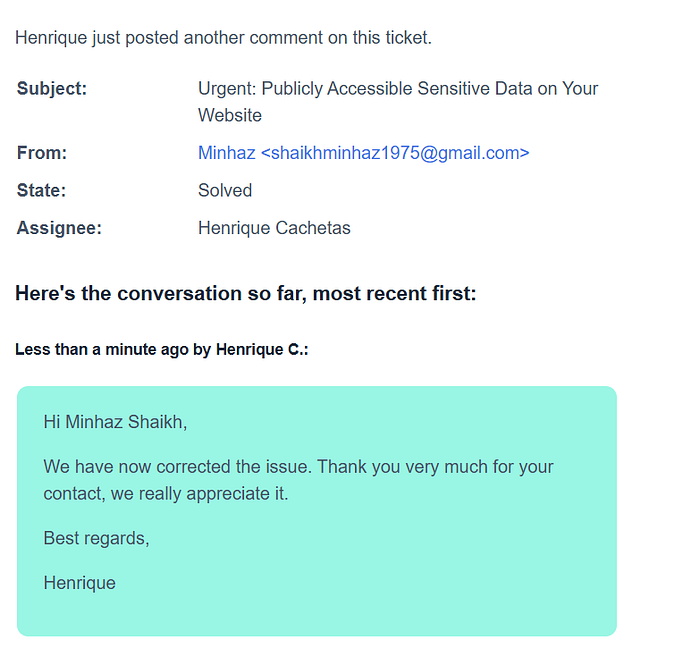
Next day — reply came:
"Thanks for reporting! We've fixed the issue and appreciate your time."
Bro. That one email gave me more confidence than 100 hours of random scanning.
You don't always need a bug-bounty program — sometimes owners don't even know, so just send a simple feedback report and they'll often acknowledge you; I've done that tons of times.
Step 6 — What I Learned From It
- You don't need insane tools. Curiosity > Tools
- Never ignore small stuff. The small stuff is what makes you stand out.
- Don't rush for money. Your first bug should teach you how to see, not how to exploit.
- Document everything. One clean write-up > ten random screenshots.
Step 7 — How You Can Do It (Right Now)
- Pick 3 React-based sites today.
- Explore the Sources tab.
- Search for
key,token,auth,api. - If you see something interesting, note it down.
- Check if there's a contact email or "Report Security Issue" page.
- Send a short, polite message.
You just might find your first real bug tonight.
Why This Matters
The first bug isn't about bounty — it's about vision. After that day, every site I opened felt different. I started noticing patterns, developer mistakes, insecure configs — things I used to scroll past.
Now go. Open DevTools. Start looking. Your first real bug is literally waiting on some random site right now.
Discord (for live bug hunts + guides): https://discord.gg/rJexj8W7yd LinkedIn: https://linkedin.com/in/minhazshaikh